Skip to content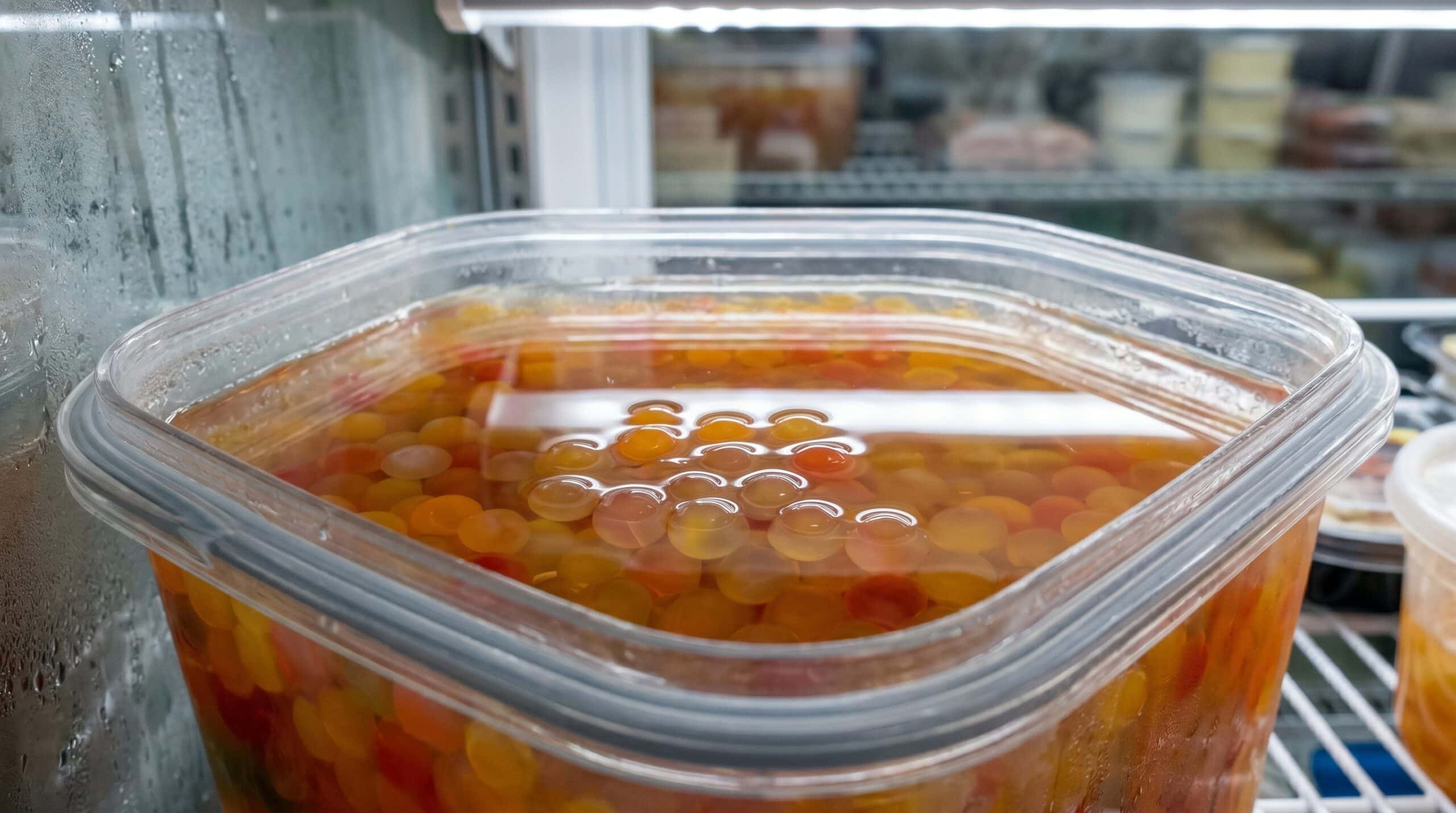
In the high-volume beverage industry, ingredient spoilage is a silent killer of profit margins. Many franchise operators focus entirely on marketing and recipe development, only to lose thousands of dollars annually to improperly handled inventory. For example, knowing exactly how to store popping boba and raw tapioca dictates the consistency of your final product. If pearls harden prematurely or fruit juices ferment on the prep line, you not only waste capital but also risk severe brand damage from negative customer experiences. Consequently, scaling a menu requires strict Standard Operating Procedures (SOPs) for the back-of-house. This comprehensive guide strips away generic advice to deliver precise, data-driven kitchen protocols. We will outline the exact temperature requirements, container specifications, and inventory rotation strategies necessary to maximize the shelf life of your premium toppings.
Popping boba utilizes a delicate sodium alginate membrane to encapsulate real fruit juice. Understanding the chemical vulnerabilities of this membrane is crucial for preventing spoilage.
Data Summary: Unopened commercial tubs of popping boba possess a shelf life of 12 to 18 months when stored in a cool, dry environment away from direct UV sunlight. The factory seal ensures a sterile environment. However, the moment the airtight seal is punctured, the countdown begins. Airborne bacteria immediately interact with the high-sugar fruit juice content. Therefore, transferring opened boba into clear, airtight polycarbonate cambros is a mandatory commercial practice. Never leave the factory plastic film partially peeled on the prep counter, as this exposes the product to cross-contamination.
Once opened, popping boba must be moved to a commercial refrigerator set between 2°C and 4°C (35°F – 39°F).
Operational Consequence: If left at ambient room temperature, the real fruit juice inside the pearls will begin to ferment within 48 hours. This fermentation produces gas, which causes the pearls to swell, turn cloudy, and eventually rupture their alginate skin. Furthermore, staff must ensure the pearls remain completely submerged in their original flavored syrup. If the pearls sit above the liquid line, the membrane will dry out and shrink, ruining the signature bursting texture.
Unlike popping boba, tapioca pearls are starch-based. Their storage protocols require managing moisture levels before cooking and managing starch retrogradation after cooking.
Raw, bulk tapioca pearls are extremely sensitive to humidity and temperature fluctuations.
Operational Rule: Never store uncooked tapioca in the refrigerator. The temperature drop introduces condensation inside the bag. This moisture prematurely activates the cassava starch, causing the pearls to crumble into powder before they even reach the boiling pot. Keep raw inventory in vacuum-sealed bags on dry, ambient shelving. Once a bag is opened, reseal it with a commercial vacuum sealer or transfer the remaining pearls to a dark, airtight container to prevent dehydration.
Cooked tapioca undergoes a rapid chemical process called starch retrogradation. As it cools, the gelatinized starch realigns into a crystalline structure, turning the soft pearl into a hard, unchewable pebble.
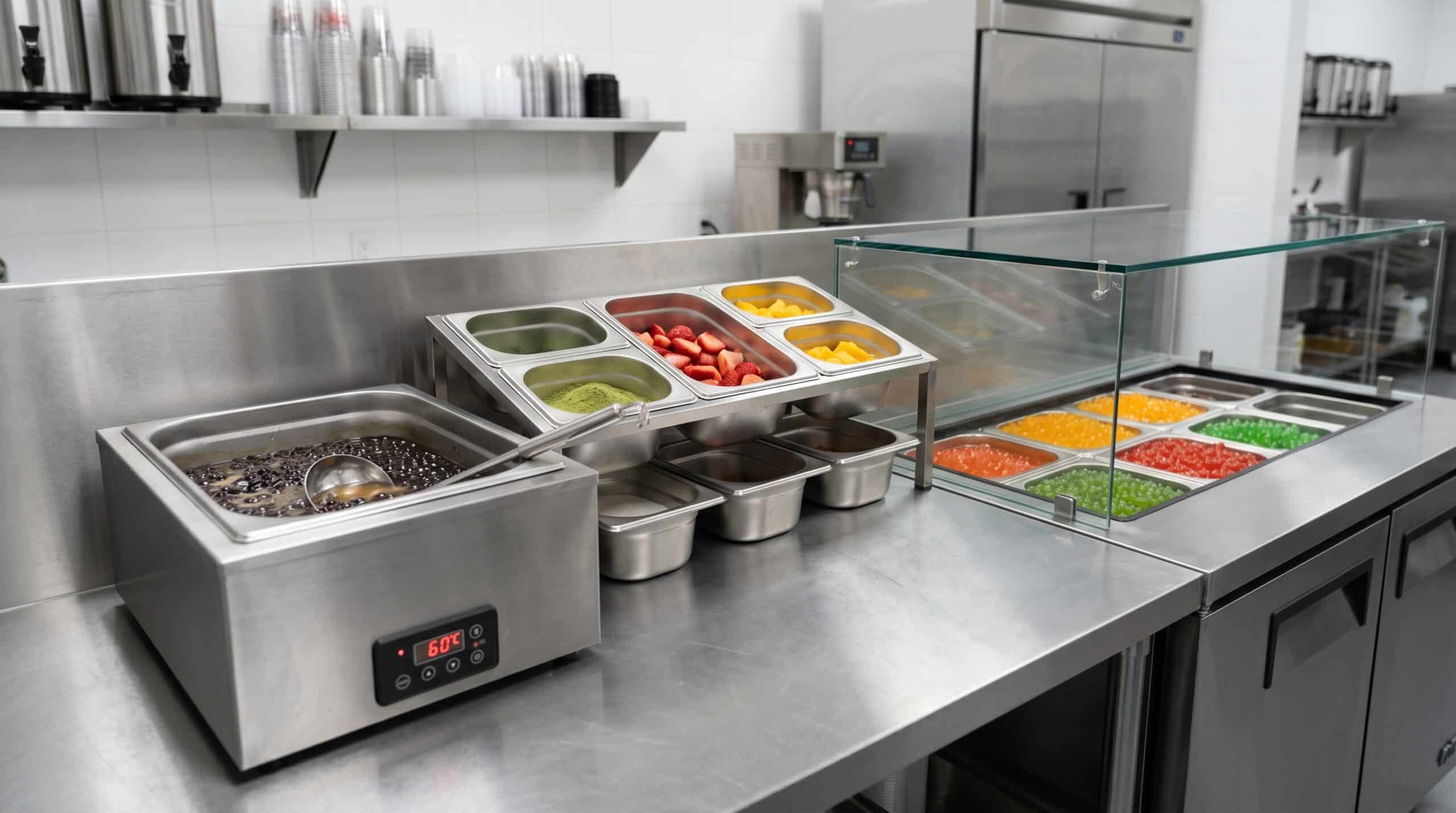
Operational Rule: Cooked boba has a strict 4-hour commercial lifespan. To maximize this window, the pearls must be coated in a heavy fructose or brown sugar syrup immediately after rinsing. More importantly, they must be held in a specialized warming pot set to a constant 60°C (140°F). After 4 hours, any remaining tapioca must be discarded and recorded on the daily waste log.
A disorganized topping station slows down service times and increases the risk of health code violations.
To ensure compliance and efficiency, invest in the proper equipment needed for boba shop topping bars. A professional layout utilizes a drop-in refrigerated prep table for popping boba, jellies, and fresh fruit, keeping them at a food-safe 4°C during service. Directly adjacent, place your heated holding pots for cooked tapioca and warm taro paste. This separation of hot and cold zones prevents rapid spoilage.
Partnering with a reliable wholesale boba supplier ensures you receive inventory with maximum shelf life. However, your staff must practice strict FIFO rotation. Every newly opened tub must be labeled with the ‘Date Opened’ and ‘Use By’ date using dissolvable kitchen tape. To streamline your reordering process before stock expires, leverage the HEFS-Boba account portal to track your historic purchasing velocity.
Q: Exactly how to store popping boba once the commercial tub is opened?
A: Immediately transfer any unused portion to an airtight container, ensure the pearls are fully submerged in their original syrup, and store them in a commercial refrigerator at 2°C to 4°C. Check out our detailed guide on how to store popping boba for more technical details.
Q: Can popping boba be frozen to extend its shelf life?
A: No. Freezing causes the liquid juice inside the pearl to expand into ice crystals. This expansion permanently ruptures the delicate alginate membrane. Upon thawing, you will be left with a mushy, deflated product.
Q: What is the official shelf life of tapioca pearls before cooking?
A: Unopened, vacuum-sealed bags last 6 to 9 months in a dry, ambient stockroom. To review specific expiration guidelines, see our documentation on the shelf life of tapioca pearls.
Q: Why does cooked tapioca get hard if placed in the refrigerator?
A: This is due to starch retrogradation. The cold environment forces the gelatinized cassava starch molecules to rapidly recrystallize, turning the chewy pearl into a hard, dense core. Never refrigerate cooked tapioca.
Q: What equipment is needed to keep cooked boba warm and chewy?
A: You must use a commercial soup warmer or a dedicated boba holding pot. The equipment must have an adjustable thermostat, set precisely to 60°C (140°F), to suspend the retrogradation process without continuing to cook the pearl.
Q: How long can bubble tea powders be stored before losing flavor?
A: Premium commercial powders retain peak aromatic flavor for 12 to 18 months. They must be stored in airtight bins to prevent clumping caused by ambient kitchen humidity.
Protecting your profit margins starts with flawless kitchen protocols. By understanding the chemical properties of your toppings and enforcing strict storage SOPs, you eliminate waste and guarantee product consistency. Ready to upgrade your commercial inventory with high-grade, stable ingredients? Please request a bulk quote or contact HEFS-Boba for samples today to secure your wholesale supply.