Skip to content
In the high-volume world of modern hospitality, beverage consistency is the defining factor of a successful franchise. For cafe owners and beverage distributors, sourcing high-quality bubble tea powder wholesale is the most effective strategy to ensure that every drink served maintains the same premium flavor profile, regardless of the barista’s experience level. Unlike fresh fruit purees which suffer from seasonal flavor variance and short shelf lives, commercial-grade powders offer a standardized Brix level and controlled aromatic concentration. This allows operators to scale their menus rapidly while protecting their gross profit margins. However, maximizing the potential of these powders requires more than just mixing; it demands a technical understanding of dissolution, infusion, and cross-category application. This guide details how professional kitchens leverage wholesale powders to dominate the market.
Operational speed and supply chain stability are the cornerstones of a profitable drink program. Wholesale powders solve the two biggest headaches in back-of-house management: labor intensity and spoilage.
During a peak lunch rush, baristas do not have the time to peel taro or steep delicate matcha leaves for every single order. Utilizing pre-formulated powders reduces the ‘per-cup’ preparation time by over 60%. Because the sweetness and creaminess are already integrated into the powder base, the margin for human error is minimized. Specifically, when a franchise uses a standardized scoop or an automated dispenser, the customer in London receives the exact same flavor experience as the customer in New York. This consistency is what builds long-term brand trust.
Fresh ingredients are a logistical liability. Fresh taro or honeydew purees typically expire within 3 to 5 days, leading to high waste-costs. Conversely, premium wholesale powders have a shelf life of 12 to 18 months when stored in a cool, dry environment. This drastically reduces the frequency of logistics orders and allows businesses to buy in bulk during lower-priced cycles. Consequently, you stabilize your COGS (Cost of Goods Sold) against market fluctuations, ensuring your menu prices remain competitive and profitable.
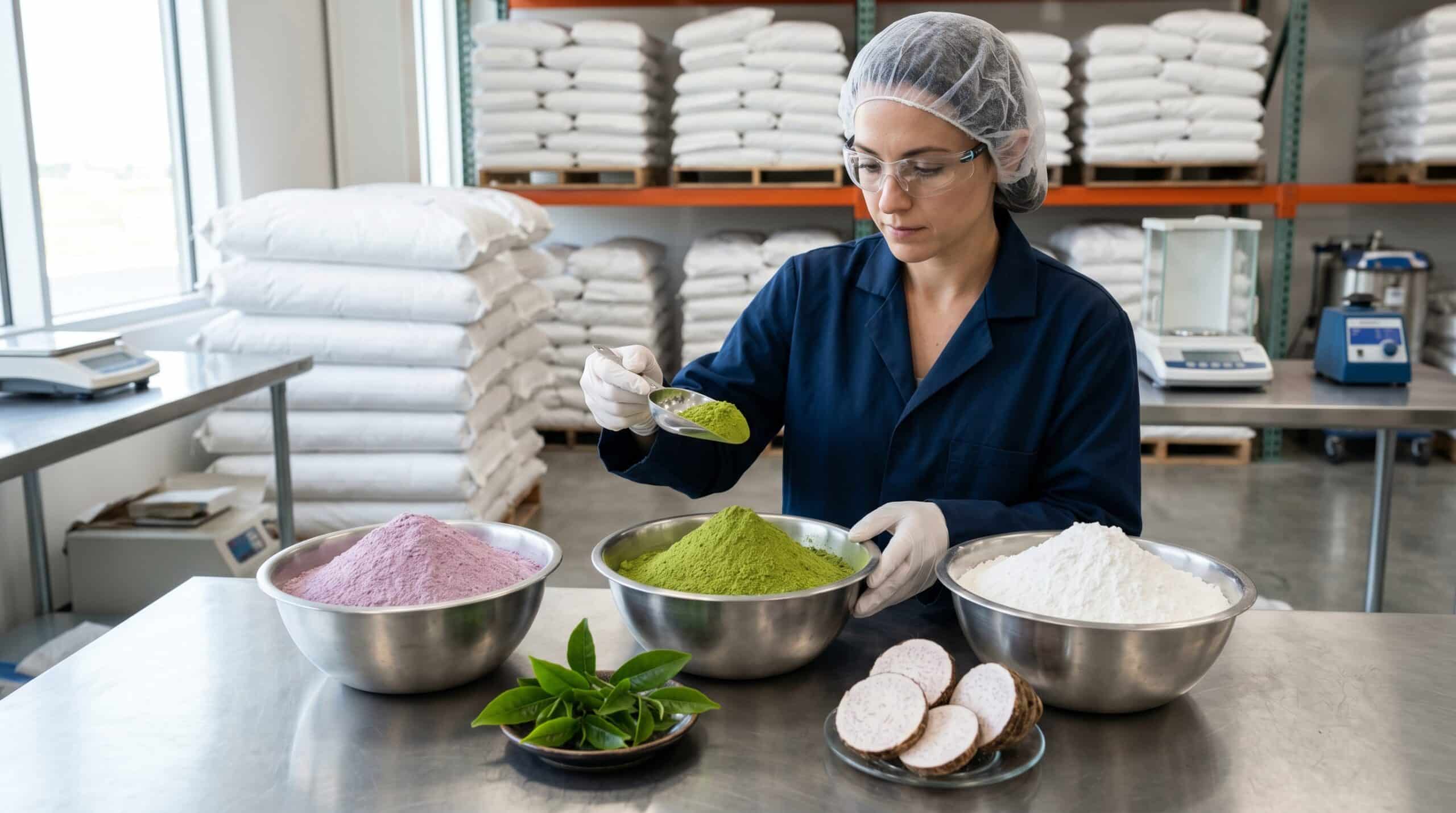
The versatility of powder goes far beyond hot milk tea. The most profitable application in 2026 is the ‘Premium Frappe’ and ‘Vibrant Slush’ category.
Taro remains one of the most popular bubble tea flavors worldwide. To create a high-end Taro Frappe, we recommend a 1:3:7 ratio: one part taro powder wholesale, three parts non-dairy creamer or whole milk, and seven parts ice. Technical Tip: To avoid a ‘chalky’ texture, baristas should first dissolve the powder in a small amount of 85°C (185°F) water before adding cold milk and ice to the blender. This fully activates the aromatics and ensures a silky-smooth mouthfeel. Top the drink with whipped cream and a sprinkle of purple taro chunks to command a 20% price premium over standard milk teas.
Summer menus demand refreshing, colorful profiles. A top-selling seasonal application is the ‘Honeydew-Matcha Duo.’ By blending honeydew powder with ice to create a base slush and layering a concentrated matcha whisked from powder on top, you create a stunning green-on-green aesthetic that is perfect for social media. This application utilizes high-margin powder bases to create ‘artisan’ visuals without the artisan labor costs. To further refine the taste, ensure you understand how to sweeten bubble tea using liquid fructose or specialized syrups to maintain the vibrant colors of the powders.
Boba powders are not limited to cups. They are highly concentrated flavoring agents that can revolutionize a bakery’s inventory.
Traditional cake extracts often lack the depth needed for authentic ‘Taiwanese-style’ desserts. By replacing 10% of the flour in a chiffon cake or sponge recipe with taro or milk tea powder, bakeries can create a naturally colored and deeply flavored cake base. The starch in the boba powder also contributes to a more tender crumb. This allows bakeries to market ‘Boba-Inspired’ cakes, which are currently trending in urban markets.
Adding liquid syrups to whipped cream often causes the cream to deflate due to excess moisture. However, folding in 20-30g of bubble tea powder during the whipping process adds flavor and stability. A ‘Brown Sugar Milk Tea’ flavored whipped cream on a standard cupcake instantly elevates the product from basic to ‘experiential,’ allowing for higher retail pricing.
Q: How do cafes use bubble tea powder wholesale for blended smoothies?
A: For a standard 16oz smoothie, cafes use 40-50g of powder blended with 150ml of liquid base and a full cup of ice. Using a high-power commercial blender ensures the powder is fully emulsified with the ice crystals for a frappe-like texture.
Q: Can taro powder be used as an ingredient for bakery pastries?
A: Yes. It is an excellent dry-weight flavoring agent. It is specifically used in mousse, pudding, and sponge cake recipes. For cold fillings, ensure the powder is whisked into a small amount of hot liquid first to prevent clumping.
Q: What is the best way to dissolve boba powders quickly in cold water?
A: Most premium powders contain emulsifiers that dissolve best in warm water (60°C+). If you must use cold water, we recommend using a handheld electric frother or a cocktail shaker with a spring ball to provide the mechanical agitation needed to break down the powder particles.
Q: How to sweeten bubble tea when using pre-mixed flavor powders?
A: Most wholesale powders are ‘3-in-1’ (flavor, creamer, sugar). However, if your customer requests 100% sweetness, you should add 10-15ml of liquid fructose. Always taste-test your base powder first, as ‘Taro’ is often sweeter than ‘Matcha’ out of the bag.
Q: Are fruit-flavored powders suitable for soft-serve ice cream machines?
A: Absolutely. By mixing the powder with a liquid soft-serve base at a ratio of 1:5, you can create unique flavors like ‘Honeydew Soft Serve’ or ‘Thai Milk Tea Gelato.’ Ensure the powder is fully strained through a fine mesh before entering the machine to prevent clogging the pump.
Q: What is the standard powder-to-water ratio for commercial milk teas?
A: The industry gold standard is 1 part powder to 6 parts water/tea for a rich profile, or 1:8 for a lighter, more refreshing drink. Always consult the HEFS-Boba product catalog for the specific density and sweetness levels of each unique flavor line.
Scaling your beverage or bakery brand requires a balance of innovation and operational discipline. By integrating premium powders into your workflow, you eliminate flavor variance and significantly reduce preparation time. Don’t let your menu stagnate with basic offerings. Please contact us for samples today and discover how our wholesale solutions can boost your margins and satisfy your most demanding customers.